
The One Thing I Keep in My Dog’s First Aid Kit That Isn’t in Any First Aid Guide
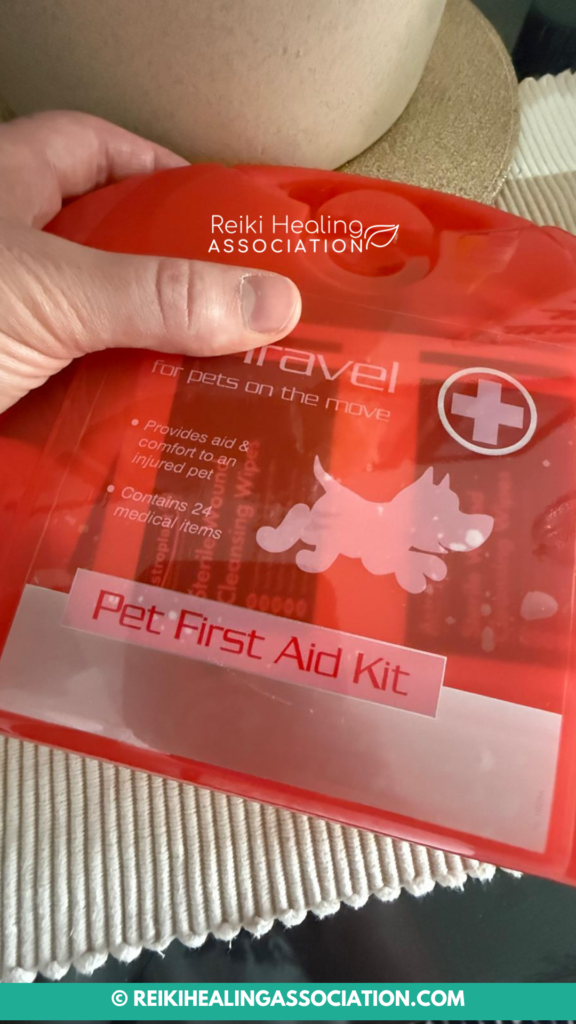
There’s a small bag in my kitchen drawer that most dog owners would recognise instantly. Blunt-ended scissors. A roll of gauze. Antiseptic wipes. A tick removal tool I hoped I’d never have to use. Saline for flushing an eye or a graze. The ordinary, sensible kit we put together for our dogs and then, mostly, forget about until the day we suddenly need it.
Mine has all of that. But it has one more thing in it that doesn’t come in any kit you can buy: Reiki.
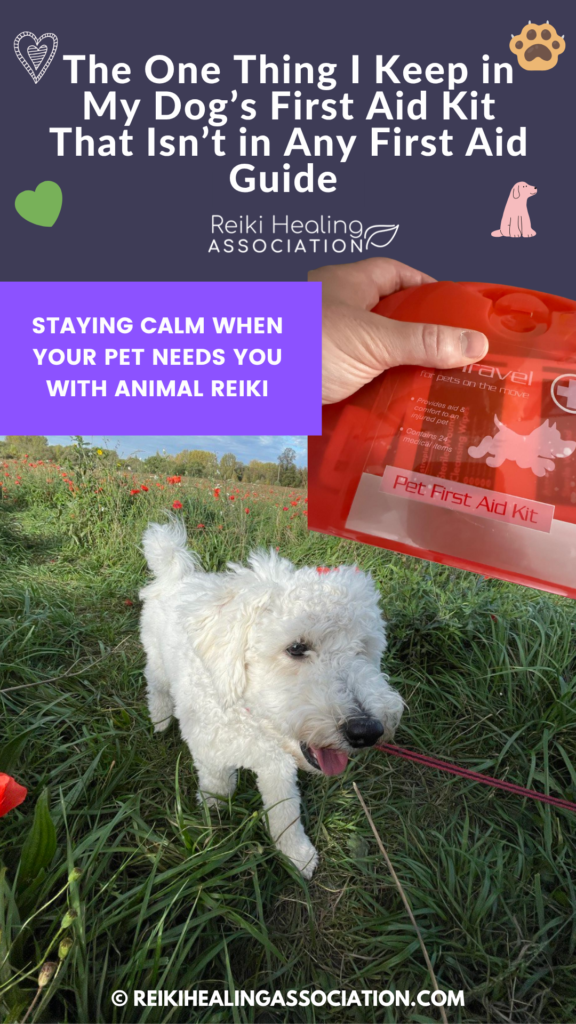
I should say plainly what I mean by that, because it matters. Reiki doesn’t replace a single item in that bag. It is not a replacement for first aid, veterinary medicine or seeking specialist support. What it can do is form part of our own internal toolbox, helping us to stay calm and navigate moments of stress or uncertainty, gently supporting us through any challenge.
Sometimes, when my dog George is poorly, I think about how much easier it can feel in the moment to support humans through stressful situations or emergencies than our four legged friends. Even if we’re genuinely concerned for a loved one we can put on a brave face, hold their hand, tell them everything is going to be ok and be their rock when life gets tough. But when it comes to George I’m acutely aware that I truly do need to be calm, I can’t just fake it in an attempt to make him feel better. Even if I tell him that he is a good boy and that he is ok, my body language, tone and even smell (yes dogs can smell adrenaline and stress hormones like cortisol) could be hinting that actually things aren’t ok right now.
And I think when people talk about Reiki for animals, the focus is often entirely on the pet receiving the healing. But what is sometimes forgotten is how deeply Reiki supports the human sitting beside them too. Because we need support to in those moments too, as we advocate for our animals and try to protect them from pain, fear, or distress.
I was reminded of that yesterday when I finally had to use the tick removal tool in the first aid kit I’d always hoped would stay untouched.
George’s first tick
Yesterday I found a tick around my poochon George’s eye.
I was doing the ordinary little care rituals I always do with George. Poochons are notoriously prone to tear staining, so cleaning around his eyes has become part of our regular routine. Just me and my little friend sitting together quietly while I wipe away the dust and sleep from the day.
But this time, as I wiped gently beneath his eye, I noticed a tiny bump.
At first I assumed it was just a bit of debris that would move away with the wipe. When it didn’t, I leaned closer.
And my heart dropped.
Could that be a tick?
In all my years of looking after dogs, I’d never dealt with one before. I check for them regularly, especially after walks, and thankfully ticks in the UK aren’t commonly associated with Lyme disease. But none of that stopped the quiet wave of panic that hit me in that moment.
I didn’t want to frighten George, so I tried to stay outwardly calm. The moment I realised it really was a tick and could see the tiny legs attached beneath his eye, my stomach turned a bit. Honestly, it looked like a little vampire clinging onto my sweet boy, and every protective instinct in me immediately kicked in.
I watched a few videos on YouTube and pulled out the tick removal tool that’s been sitting in my first aid kit for years. I didn’t get it the first time. It was in such an awkward position it was quite difficult to get the tool in the right place. But I managed to get it out, all parts removed safely, and cleansed the area with some saline.
Once it was removed, I just sat there quietly with him. When the adrenaline began to fade, I became aware of this overwhelming mix of emotions sitting in my body all at once.
I felt guilty for not noticing it sooner, even though logically I know I hadn’t caused it and couldn’t have prevented every possibility. Worried in case it had passed any nasty bugs over. And beneath all of that was the simple, vulnerable truth most animal lovers understand instantly: when something happens to our animals, we feel it immensely.
I didn’t argue with any of it. I simply sat down beside him, rested my hands on his side, and let Reiki be there with us. And slowly the storm in me eased. The anger thinned out. The guilt loosened.
Reiki didn’t take those emotions away.
But it softened the spiral of panic. It gently brought me back to calm.
And this is so important because animals notice it all.
Dogs are deeply intuitive animals.
They are extraordinarily sensitive to our emotional state, far more than we tend to give them credit for. They read us constantly. Our breathing. Our posture. The tension that creeps into our hands. The tightness in our voice. When we become frightened, hurried, or overwhelmed, they often absorb that emotional current in an instant.
This is something every experienced animal Reiki practitioner comes to understand. Animals are remarkably attuned to the energy of our thoughts and feelings.
This is why Reiki is so beneficial for both the animal and the human.
Both benefit from the moment of regulation and balance.
This is one of the reasons why I love Reiki as a self-care tool.
The Extra Thing in the Kit
So yes, my dog’s first aid kit still contains all the practical things you’d expect.
The gauze. The saline. The antiseptic wipes.
And beside them sits something invisible but no less real to me: the ability to pause before I panic. To soften instead of spiral. To meet my dog with steadiness rather than fear.
Not instead of proper care or advise.
But alongside it.
So I can be calm and steady point my dog can settle against.
And over time, I’ve come to think that might be one of the most valuable things we can offer the animals who trust us with their lives.
© Copyright Reiki Healing Association™ 2026+ | All Worldwide Rights Reserved
Disclaimer: Reiki is a complementary practice that supports relaxation and wellbeing. It is not a substitute for veterinary care and does not diagnose, treat, or cure any illness or injury. If your animal is unwell, injured, or in distress, always consult a qualified veterinarian. The experiences shared here are personal and not medical advice.

Like this article? Share your thoughts in the comment box below!
And for more Reiki resources, be sure to connect with the Reiki Healing Association on Instagram, where we post daily Reiki inspiration and advice for healing and growth as a Reiki Practitioner or Reiki-enthusiast! And don’t forget to follow us on Pinterest, where we are pinning positive affirmations and empowering quotes every single day.
Have you read the latest issue of Universal Life Magazine yet? As Members of the RHA you get Exclusive Access to the Magazine, and to access your copy all you need to do is log in to your Member’s Area. You can get a copy of the magazine if you subscribe to our newsletter too!
More Articles For You
- Healing the Root Chakra: Simple Ways to Ground and Balance the Muladhara [Chakra Healing Series]
- Healing the Sacral Chakra: Simple Ways to Awaken Creativity and Flow [Chakra Healing Series]
RHA Launches World’s First Ho’oponopono Reiki Certification - Issue 7 of RHA Universal Life Reiki Magazine Released – Read it here
- The Beautiful Cho-Ku-Rei: Power in the Palm of Your Hand
- How to Send Reiki to Wildlife
- How to Perform Distant Reiki with a Surrogate: A Step-by-Step Guide
- The Three Diamonds vs. Seven Chakras – what’s the difference?
- Just for today I will be Grateful – How to Live Each Day with Gratitude
- Setting Up Your Week For Powerful Reiki Sessions
- What to Expect during a Reiki Session: Our Members Share the most common experiences
